
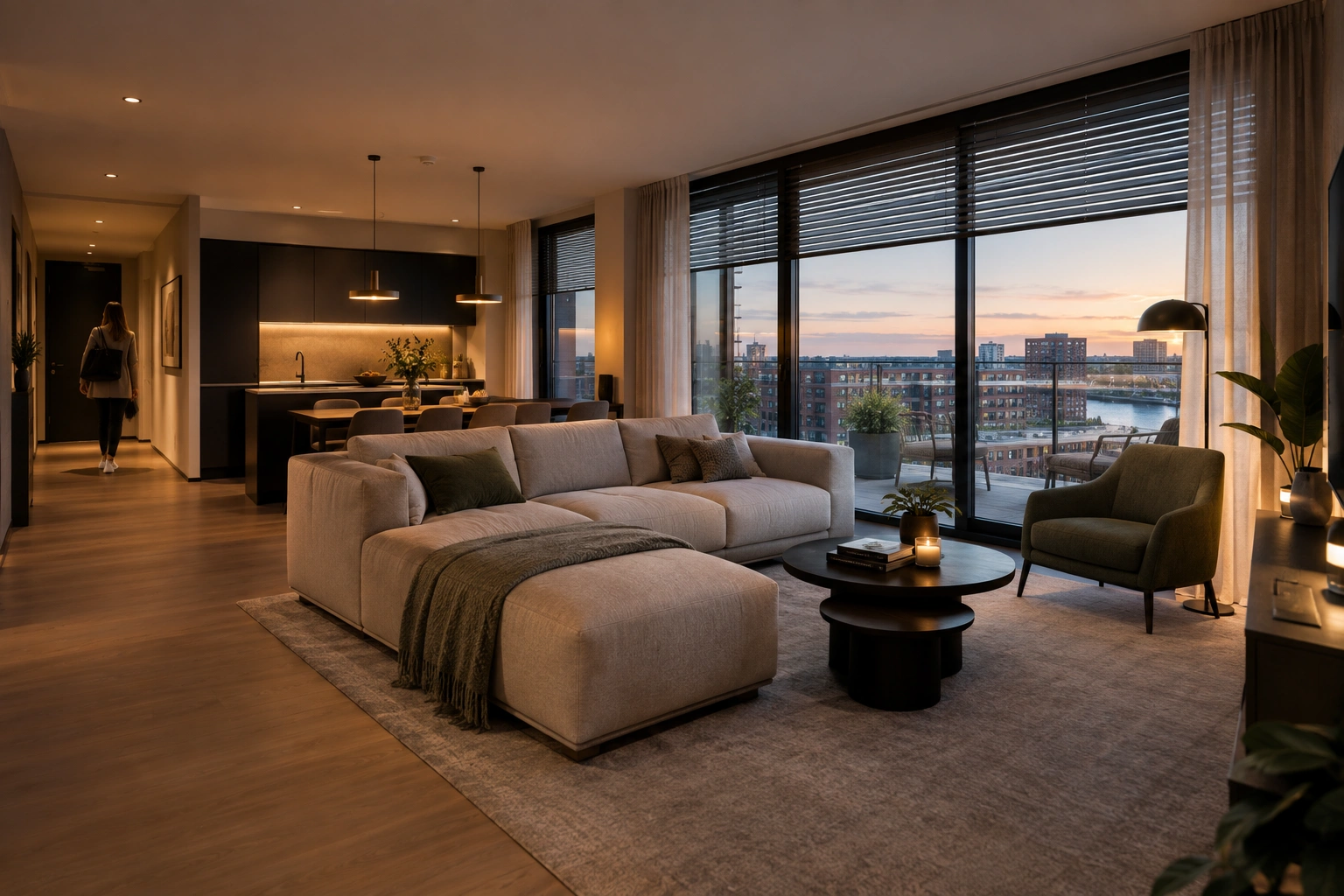
A smart home isn’t about having more technology. It’s about creating a home that responds to the way you live.
Imagine arriving home with your hands full and the lights already on. Your blinds adjust to the changing daylight, the temperature is comfortable, and when you leave, your home takes care of the things you might otherwise forget.
These small moments are where intelligent building automation makes a real difference.
With the right combination of sensors, controls and connected systems, everyday routines can become simpler, more comfortable and more intuitive.
In this article, we explore 12 practical automations that can make life at home easier — from the moment you wake up to the moment you turn in for the night.
01 — Lights That Welcome You Home
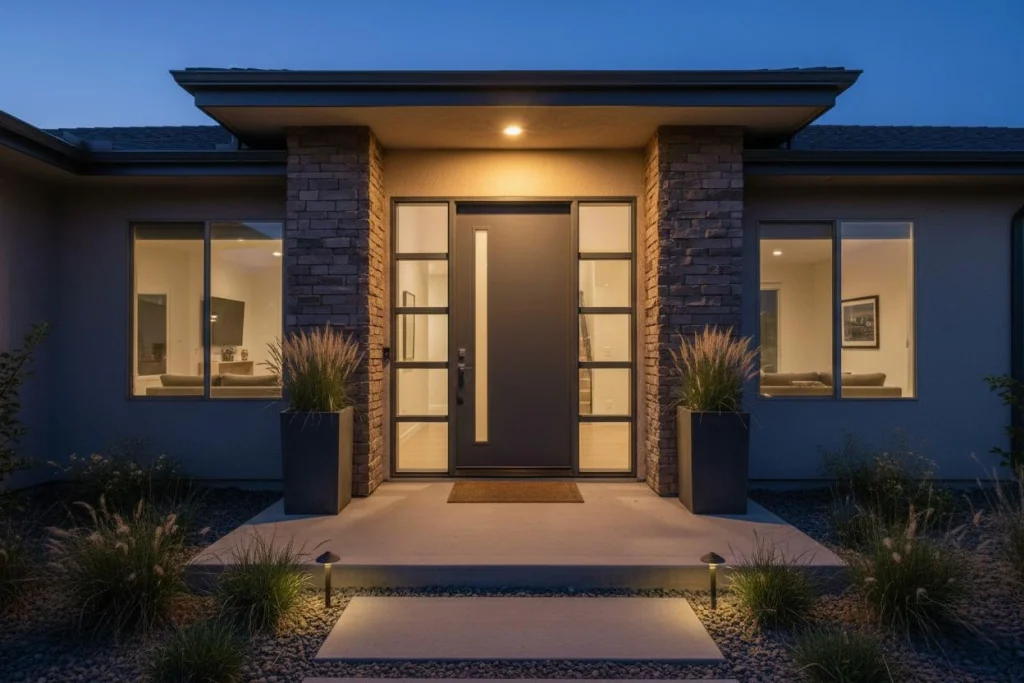
There’s something nice about arriving home and not having to think about the lights.
With intelligent lighting automation, your home can recognise when you’re arriving and respond accordingly. Depending on the system and how it is configured, entrance lights can switch on, outdoor lighting can illuminate your path, and selected areas of your home can be ready to welcome you in.
How it works
Using presence detection, geofencing or other configured triggers, your automation system can activate lighting when you arrive home.
For example, imagine coming back from work after sunset. As you approach your property, the entrance lights come on. When you walk inside, the hallway is already lit, so you don’t have to search for a switch in the dark.
Why it’s useful
- Convenience: No need to find switches when arriving with shopping bags or children.
- Comfort: Walk into a welcoming, well-lit home.
- Practicality: Help illuminate entrances and pathways when it’s dark.
- Personalisation: Set different lighting scenes for different times of day.
The same principle can apply when returning home late at night, arriving after a trip or simply coming back from the garden.
A small automation that makes coming home feel easier.
02 — A Morning Routine That Starts the Day for You
The way your home behaves in the morning can have a surprisingly big impact on how your day begins.
Instead of reaching for multiple switches, remotes or apps, your home can help ease you into the day.
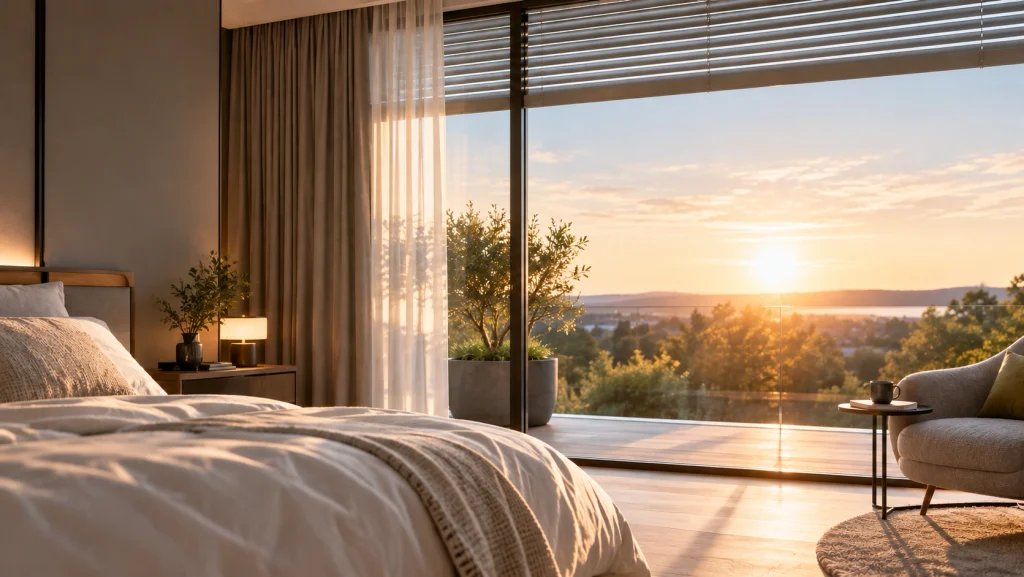
As your morning routine begins, selected lights can gradually brighten, blinds can open to let in natural daylight, and the heating or cooling can adjust to create a comfortable environment.
You could even have a dedicated “Good Morning” scene that activates everything at once — ideal for busy mornings when you want to get moving without thinking about the small details.
How it works
A morning automation can be triggered by:
- A scheduled time
- Your alarm or wake-up routine
- A presence sensor detecting movement
- A manual command through the Loxone App or a wall control
The exact sequence can be tailored to your lifestyle. A weekday morning might be practical and efficient, while a weekend routine could be slower and more relaxed.
Why it helps
A coordinated morning routine can:
- Reduce the number of tasks you need to remember
- Make better use of natural daylight
- Create a more comfortable start to the day
- Help establish consistent routines
- Make the home feel more responsive and personal
It is not about making your morning more complicated with technology. It is about allowing the technology to take care of the things you would otherwise have to do yourself.
A few simple adjustments can make getting up feel noticeably easier.
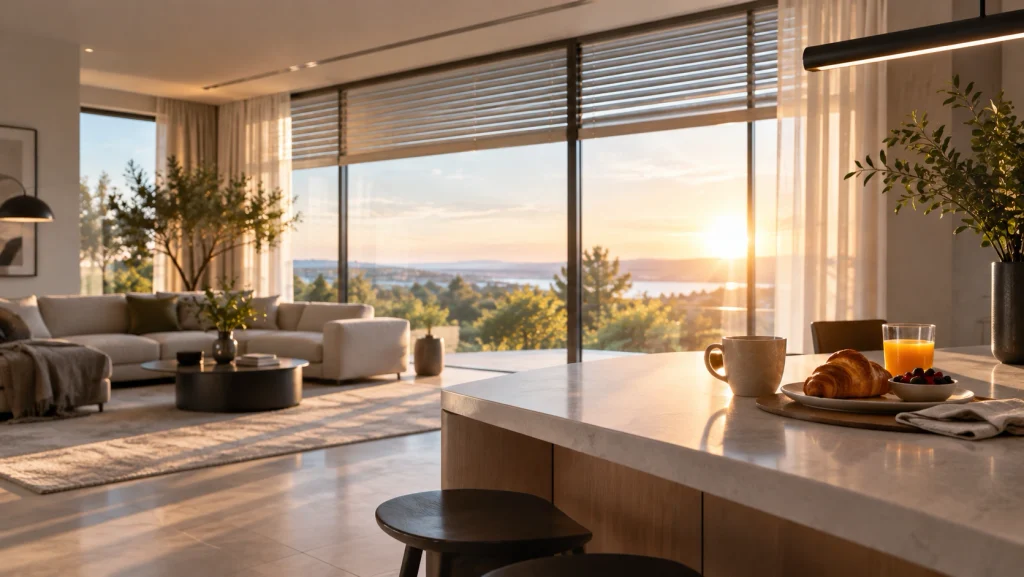
03 — Blinds That Adjust to the Daylight
Natural light can completely change how a room feels throughout the day. But constantly opening, closing and adjusting blinds can quickly become another task to manage.
With automated shading, your blinds can respond to the position of the sun, the time of day and the conditions inside your home.
In the morning, blinds can open gradually to welcome natural daylight. As the sun becomes stronger, they can adjust to reduce glare and help prevent rooms from overheating. In the evening, they can close to create a more private and comfortable atmosphere.
How it works
Automated blinds can be controlled through:
- Time-based schedules
- Sun position and daylight levels
- Indoor temperature
- Room occupancy
- Manual controls or the Loxone App
The system can also be configured around individual rooms. For example, bedroom blinds may remain closed for privacy, while kitchen and living-area blinds adjust throughout the day to make the most of available daylight.
Why it helps
Automated shading can:
- Reduce glare on screens and televisions
- Support a more comfortable indoor temperature
- Improve privacy throughout the day
- Make better use of natural light
- Reduce the need for constant manual adjustments
The result is a home that responds naturally to changing daylight — without you having to think about it.
Your blinds become part of the way your home works, rather than another thing you need to manage.
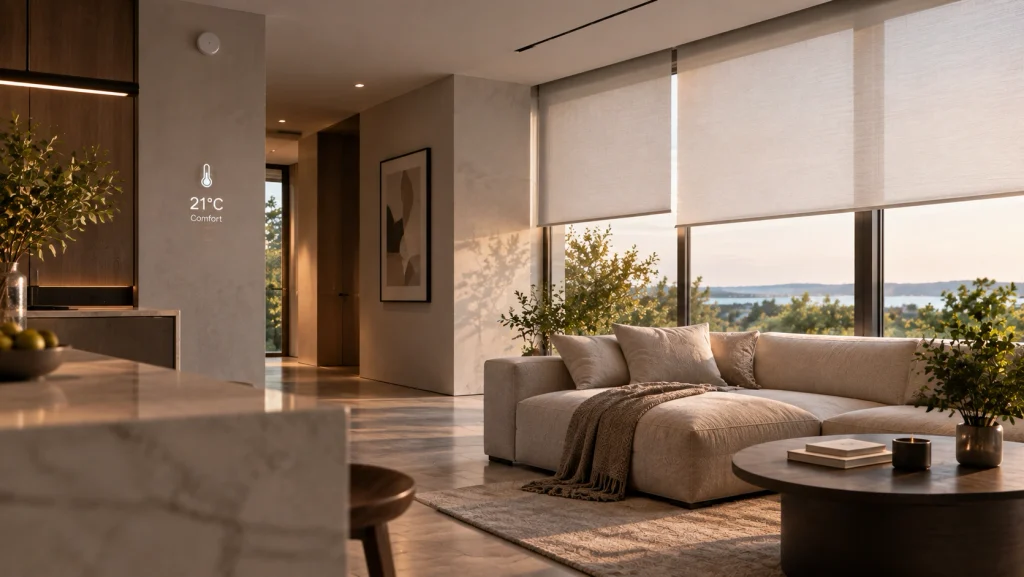
04 — A Comfortable Temperature Without Constant Adjustments
A comfortable home should not require you to keep changing the thermostat throughout the day.
With intelligent climate control, your home can respond to room temperature, occupancy, time of day and changing weather conditions to help maintain a comfortable environment.
For example, your living room can be warmed before you arrive home, the temperature can be reduced when everyone leaves, and bedrooms can follow a different schedule from the rest of the house.
How it works
Climate automation can combine:
- Temperature sensors
- Room occupancy
- Time-based routines
- Heating and cooling systems
- Window and door contacts
- Control through the Loxone App
Instead of treating the entire home as one space, each room can respond to how it is actually being used.
Why it helps
Intelligent climate control can:
- Improve everyday comfort
- Reduce unnecessary heating or cooling
- Avoid wasting energy in empty rooms
- Support different preferences in different spaces
- Make temperature changes feel more automatic
The aim is not simply to keep a room at one fixed temperature. It is to create a home that adapts to your routine while using energy more thoughtfully.
Comfort becomes something your home helps maintain — not something you constantly have to manage.
05 — Lights That Turn Off When You Leave
It is easy to leave a light on when moving from one room to another — especially when you are in a hurry.
With occupancy-based lighting, your home can detect when a room is being used and adjust the lights accordingly.
Lights can switch on when someone enters a space, remain on while the room is occupied and turn off after the room has been empty for a set period.
How it works
The automation can use:
- Presence or motion sensors
- Room-specific lighting settings
- Time of day
- Natural daylight levels
- Manual controls and the Loxone App
The lighting behaviour can be different in each room. A hallway may use a short, practical lighting period, while a living room may stay illuminated for longer when people are relaxing.
At night, the system can also use lower light levels to avoid creating unnecessary glare when someone gets up.
Why it helps
Occupancy-based lighting can:
- Reduce wasted electricity
- Prevent lights being left on unnecessarily
- Make movement through the home easier
- Improve nighttime comfort
- Reduce the number of switches you need to use
The goal is not to remove control. You can still adjust the lights manually whenever you want — but the system handles the everyday moments automatically.
The lights respond when you need them, and switch off when you no longer do.
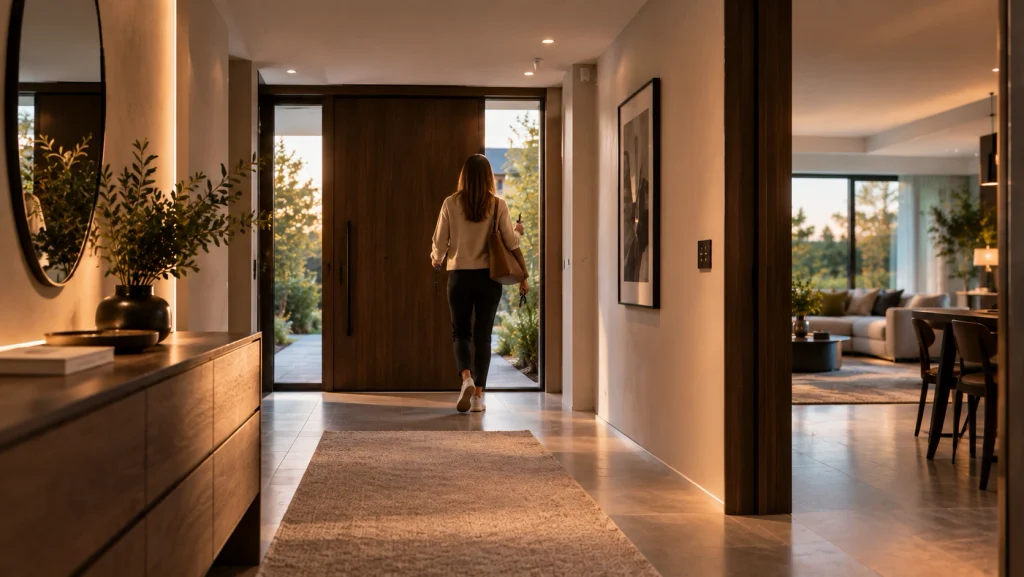
06 — A Home That Knows When You Leave
Leaving the house often comes with a familiar mental checklist.
Are the lights off? Is the heating still running? Did someone leave a window open? Is the alarm set?
A well-designed automation system can take care of many of these details as you leave, helping your home transition into an energy-saving and secure mode.
When the last person leaves, selected lights can switch off, heating and cooling can adjust, unnecessary equipment can be powered down and the security system can be activated — depending on how the system is configured.
How it works
An “Away” routine can be triggered through:
- Presence detection
- Geofencing or mobile presence
- A dedicated wall switch
- The Loxone App
- A combination of sensors and door contacts
The automation can also be configured with practical exceptions. For example, outdoor lighting may remain active, essential systems can continue running and selected rooms can be excluded if someone is still at home.
Why it helps
An automated leaving routine can:
- Reduce energy waste
- Prevent lights and equipment being left on
- Support a more consistent security routine
- Give you greater peace of mind
- Reduce the number of things you need to check before leaving
Rather than relying on memory every time you walk out the door, your home can follow a carefully designed sequence.
One simple action can help prepare the entire home for your absence.
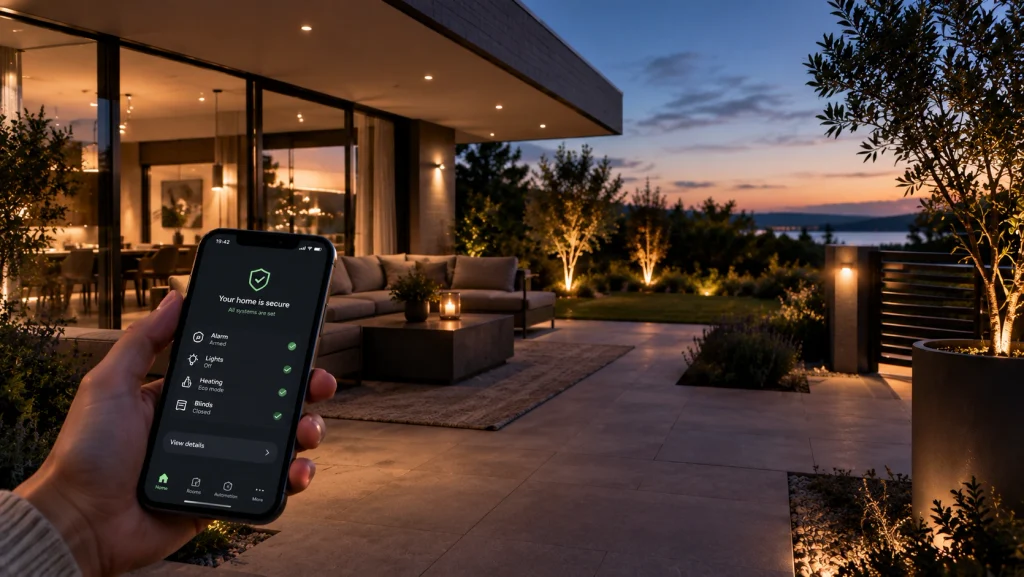
07 — Check Your Home from Anywhere
Sometimes the most useful automation is knowing what is happening at home when you are not there.
Whether you are at work, away for the weekend or already in bed, a connected home can give you a clearer overview of your property and its systems.
Through the Loxone App, you can check selected lighting, climate, shading and security functions from your phone. You may also receive notifications when something needs your attention, depending on the system configuration.
How it works
Remote monitoring can help you:
- Check whether lights have been left on
- Adjust the temperature before arriving home
- View the status of blinds and shading
- Review security or access notifications
- Control selected devices from the Loxone App
- Confirm that your home is operating as expected
This does not mean every system needs to be controlled remotely all the time. Often, the greatest value is simply having visibility when you need it.
Why it helps
Remote access can provide:
- Greater peace of mind while away
- More convenient control of your home
- Faster awareness of unusual activity
- Easier management of holiday or away settings
- A simple way to make changes without being on site
Your home continues to operate automatically in the background, while remote access gives you an additional layer of control and awareness.
Even when you are away, your home is never completely out of reach.
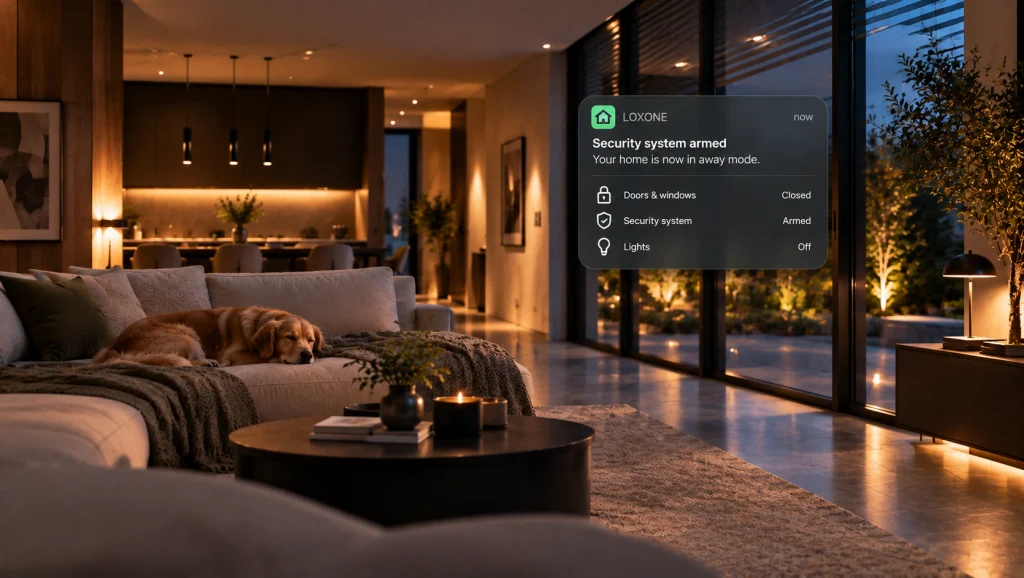
08 — A Simple “Goodnight” Routine
The end of the day is another opportunity for your home to make life easier.
Instead of walking through the house switching off lights, closing blinds and checking every room, a single “Goodnight” command can bring everything together.
With one press on a wall control, through the Loxone App or as part of a scheduled routine, your home can prepare for the night.
How it works
A goodnight scene could:
- Switch off selected lights
- Dim bedroom lighting to a softer level
- Close blinds for privacy
- Adjust the temperature for sleeping
- Turn off selected entertainment equipment
- Activate suitable security settings
- Leave essential night lighting available
The routine can be personalised to suit your household. For example, hallway lighting may remain at a low level so that someone can move around safely during the night.
Why it helps
A goodnight routine can:
- Reduce the number of tasks before bed
- Create a calmer evening atmosphere
- Support better nighttime comfort
- Improve privacy and security
- Prevent unnecessary lights and equipment being left on
The system does not need to take control away from you. It simply brings several small actions together into one easy routine.
A calmer home at night starts with fewer things left to think about.
09 — Security Alerts That Matter
Security automation is not just about alarms. It is also about being informed when something unusual happens at home.
A connected system can monitor selected doors, windows and movement sensors, helping you stay aware of activity without needing to check everything manually.
For example, you could receive a notification if a door is opened while the house is in Away mode, if a window is left open before the alarm is armed, or if unexpected movement is detected in a protected area.
How it works
Depending on the system configuration, security automation can combine:
- Door and window contacts
- Motion and presence sensors
- Alarm functions
- Smart locks and access control
- Notifications through the Loxone App
- Automated lighting or other responses
Not every event needs to trigger the same response. A notification may be enough for one situation, while another could activate lighting, sound an alarm or prompt you to check the home.
Why it helps
Connected security can:
- Make unusual activity easier to identify
- Reduce the need for constant checking
- Support more consistent alarm routines
- Provide useful information while you are away
- Connect security with lighting and other home systems
The goal is to provide relevant information at the right time, rather than overwhelming you with unnecessary alerts.
Good security automation helps you stay informed without making you feel constantly on guard.
10 — Smarter Energy Use, Less Waste
Your home can do more than respond to you. It can also help you use energy more wisely — without requiring constant attention.
By combining information from sensors, schedules and your daily routines, automation can reduce unnecessary energy use, optimise heating and cooling, and make better use of natural daylight.
How it works
Energy efficiency can be supported through:
- Temperature and occupancy sensors
- Automated lighting and shading
- Smart heating and cooling control
- Energy monitoring
- Scheduled routines
- The Loxone App
For example, heating and cooling can adjust when rooms are occupied, blinds can help manage solar heat gain, and lights can respond to available daylight.
Why it helps
Smarter energy use can:
- Reduce unnecessary energy consumption
- Help lower running costs
- Avoid heating or cooling empty rooms
- Make better use of natural resources
- Support a more sustainable home
A more efficient home is not only beneficial for your comfort, but also for the resources it uses.
The best energy-saving features are often the ones that work quietly in the background.
11 — Automation for a Safer Home
Home automation can do more than make everyday life easier. It can also help create a safer environment for you and your family.
From smoke and heat detection to water leaks and unusual activity, connected systems can monitor important conditions and notify you when something needs your attention.
How it works
Safety features can include:
- Smoke and heat detectors
- Water leak sensors
- Air quality and CO₂ monitoring
- Carbon monoxide detection
- Door and window contacts
- Notifications through the Loxone App
Depending on the system configuration, certain events can also trigger an automated response. For example, selected lights may switch on during an alert, or a notification may be sent when a leak is detected.
Why it helps
A connected safety system can:
- Help identify potential problems earlier
- Reduce the risk of serious damage
- Keep you informed when you are away
- Support a more consistent safety routine
- Provide greater peace of mind
Automation cannot replace responsible maintenance or appropriate safety equipment, but it can help bring important information together and make it easier to respond.
The right alert at the right time can make all the difference.
12 — A Home That Keeps Improving
Your home should be able to evolve as your needs change.
With a flexible automation system, you can add new features over time, adapt routines and make adjustments without needing to redesign the entire system.
Your requirements may change as your family grows, your working habits develop or you make changes to the property. A well-planned system can accommodate these changes more easily.
How it works
A future-ready automation system can support:
- Additional rooms and devices
- New lighting or shading features
- Updated routines and scenes
- Changes to heating and cooling
- Easy adjustments through the Loxone App
- Integration with other connected systems
For example, a room that was once used as a home office may later become a nursery, guest room or entertainment space. The automation can be adjusted to suit its new purpose.
Why it helps
A flexible system can:
- Adapt to changing lifestyles
- Reduce the need for major changes later
- Make future upgrades easier
- Keep the home relevant over time
- Provide a more considered long-term solution
The aim is not to install every possible feature from the beginning. It is to create a strong foundation that can grow with you.
A well-designed smart home should be ready for what comes next.
A Smarter Home. A Simpler Life.
Home automation is not about technology for the sake of technology. It is about creating a home that supports your routines, adapts to your needs and gives you more time for what matters.
From lighting and climate to shading, security and energy use, connected systems can work together to make everyday life simpler, safer and more comfortable.
With Loxone and DY Techniek, your home can respond to your routines, adjust to changing conditions and operate quietly in the background — so you can focus on living, not managing.
The result?
- More comfort
- Greater energy efficiency
- Improved security
- Less everyday effort
- More time for what matters
Your home should work for you, not the other way around.
Ready to make your home work smarter?
Get in touch with DY Techniek to discuss your home automation project and explore how intelligent technology can be designed around the way you live.