

Home | Solutions | Intelligent Workspaces | Climate Control
Climate Control
Zoned comfort
Manage temperature and ventilation according to the needs of individual spaces.
Occupancy aware
Adjust climate settings as rooms become occupied or empty.
Air quality responsive
Use available CO₂ and humidity measurements to control compatible ventilation.
Energy conscious
Reduce unnecessary heating, cooling and ventilation outside occupied periods.
Simple control
Give authorised users clear control while automation manages everyday adjustments.
Climate Control
Can different rooms have different temperatures?
Yes. Suitable zoning allows offices, meeting rooms and shared spaces to operate with individual temperature targets and schedules.
Can climate control respond to occupancy?
Yes. Presence information can help determine whether a room should maintain its occupied setting or move to a more economical unoccupied mode.
Can the system monitor indoor air quality?
With appropriate sensors, the system can monitor conditions such as CO₂, humidity and temperature. Compatible ventilation equipment can respond according to configured thresholds and room requirements.
Can staff adjust the temperature themselves?
Yes. Appropriate wall controls or app permissions can allow staff to make adjustments within the limits established for each area.
Can existing heating, cooling or ventilation equipment be integrated?
Possibly. Compatibility depends on the equipment, controller and available communication interfaces. DY-Techniek assesses the existing installation before recommending an integration approach.
What happens when a window is opened?
Where suitable window contacts are installed, the system can reduce or pause heating, cooling or ventilation in that room according to the configured behaviour.
How much energy can intelligent climate control save?
Savings depend on the building, equipment, operating hours and existing control strategy. Avoiding unnecessary conditioning in empty areas can reduce consumption, but results vary by project.
Climate designed around work
Temperature and air quality affect how a workplace feels throughout the day.
A busy meeting room can require a different response from a quiet office, while direct sunlight and changing outdoor conditions can affect each part of the building differently.
DY-Techniek combines suitable sensors, controls and Loxone automation to coordinate climate around the way your workplace is actually used.
Intelligence behind every room
The right conditions, where and when they are needed.
Intelligent climate control uses measured room conditions, occupancy, schedules and connected equipment to determine how each zone should respond.
Loxone coordinates heating, cooling and ventilation through the supported functions of the installed system, allowing individual areas to operate according to their needs.
- Measure temperature in individual zones.
- Monitor CO₂ and humidity where suitable sensors are installed.
- Apply occupied and unoccupied climate settings.
- Coordinate compatible heating, cooling and ventilation equipment.
- Respond to schedules, presence and open windows.
Different spaces. Different requirements.
Zoned climate control
An open-plan office, meeting room and reception area do not experience the same conditions.
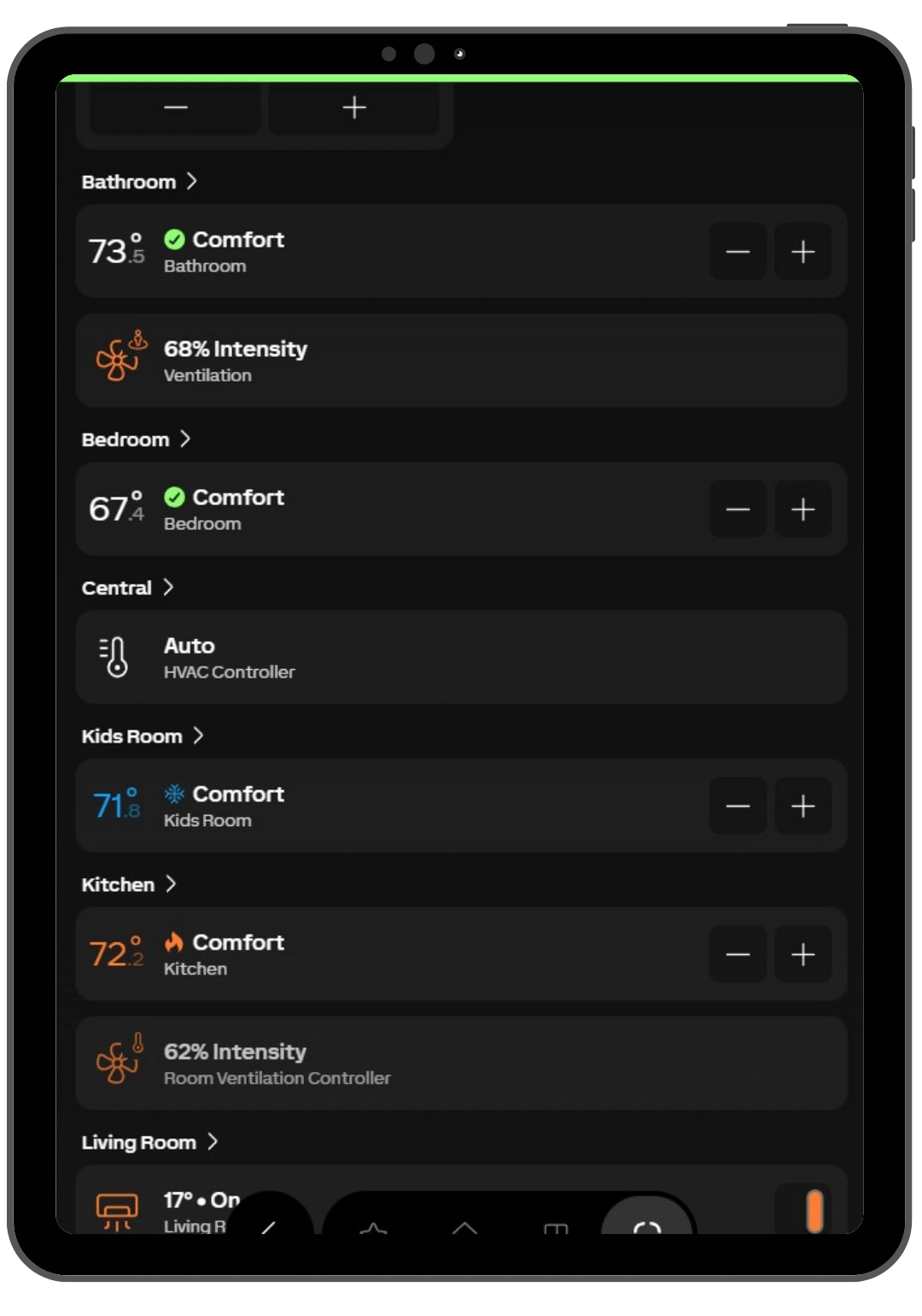
Zoned climate control allows each area to follow an appropriate temperature target and schedule. Instead of treating the whole building as one space, the system directs its response according to the needs of individual zones and the capabilities of the installed equipment.
Open workspaces
Maintain suitable conditions across areas used throughout the working day.
Meeting rooms
Respond to changing occupancy and the additional heat generated by groups of people.
Individual offices
Manage each zone according to its use and available controls.
Shared areas
Avoid maintaining full occupied settings in spaces that are used intermittently.
Comfort that follows your team.
Occupancy-based control
Heating, cooling and ventilating empty rooms wastes energy without improving anyone’s working environment.
Presence information and business schedules allow rooms to move between occupied and unoccupied settings. A meeting room can respond when people arrive, while unused areas remain at their configured economical level.
Suitable preconditioning can prepare important spaces before normal working hours, so comfort does not have to begin only after staff arrive.
Occupied settings
Maintain the configured comfort conditions while a room is in use.
Unoccupied mode
Reduce unnecessary climate demand when selected spaces become empty.
Scheduled preparation
Bring priority areas towards their working conditions before planned occupancy.
Flexible working
Respond to authorised staff arriving outside standard business hours.
Fresh air when rooms need it.
Air quality and ventilation
Room temperature is only one part of workplace comfort.
CO₂ can rise as people gather in meeting rooms and shared areas, while humidity may change with occupancy, weather and building use. With suitable sensors and compatible equipment, ventilation can respond to measured conditions rather than relying only on a fixed schedule.
This helps provide the required air exchange when spaces are occupied while reducing unnecessary ventilation when demand is lower.
CO₂ monitoring
Measure carbon dioxide levels to support demand-based ventilation.
Humidity awareness
Use available humidity information as part of the room’s ventilation strategy.
Occupancy response
Increase or reduce compatible ventilation according to room use.
Room-specific control
Apply an appropriate response to each area rather than treating every space identically.
One climate strategy for every season.
Heating and cooling coordination
Heating and cooling systems should not work against each other.
Intelligent control coordinates available equipment around measured temperature, operating mode and room demand. Defined changeover rules and temperature ranges can help avoid unnecessary switching between heating and cooling.
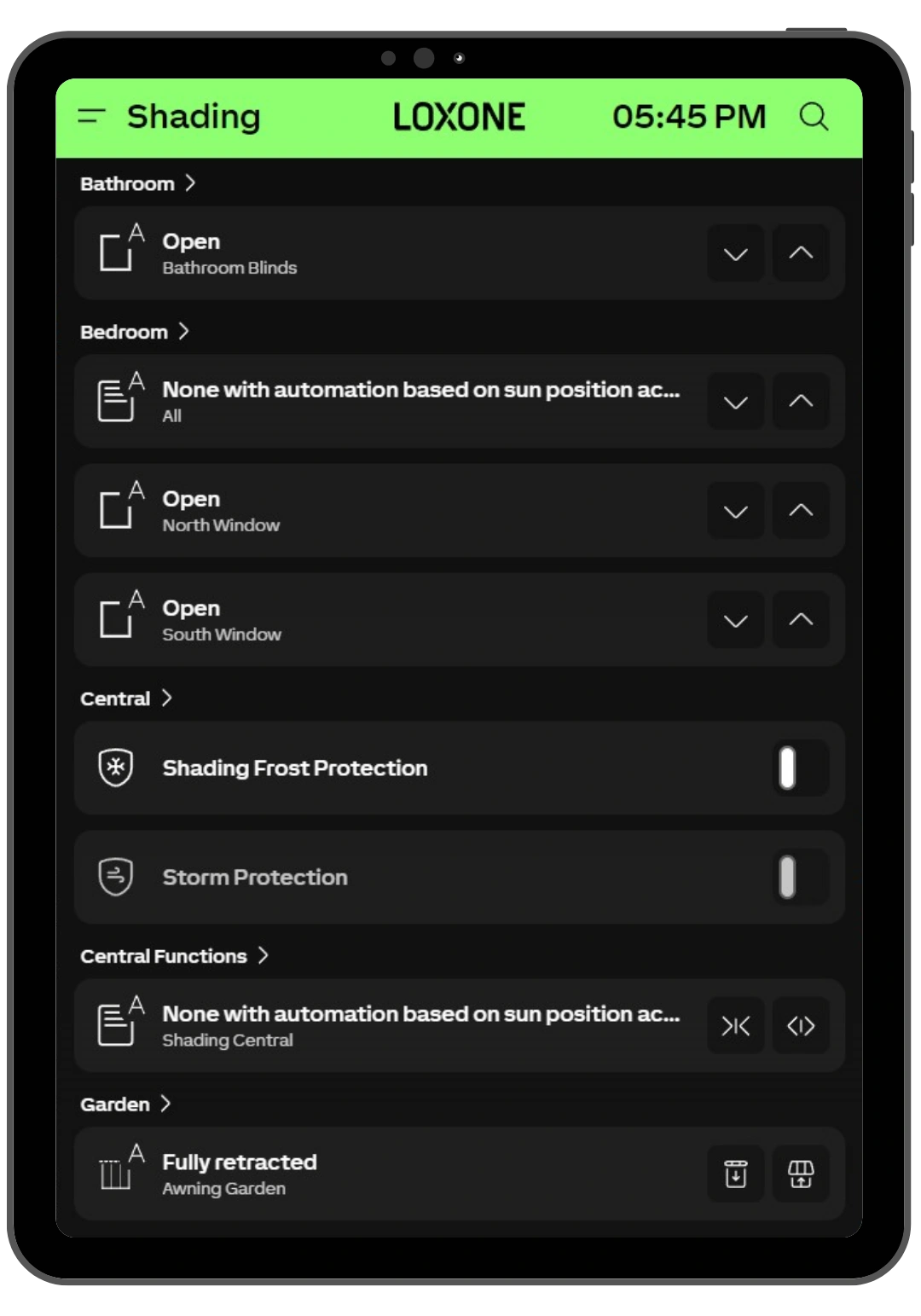
Where external shading is integrated, it can also help manage solar heat before additional cooling is required.
Temperature control
Coordinate compatible equipment around the target established for each zone.
Heating and cooling logic
Apply configured rules that help prevent conflicting operation.
Seasonal response
Adapt control strategies to changing outdoor conditions and building requirements.
Predictive preparation
Begin conditioning appropriate spaces ahead of occupancy where the system supports it.
Climate works with the building
Manage comfort before energy is consumed.
Climate control becomes more effective when it works with other building functions.
Shading can reduce solar heat entering the building, presence determines whether a room requires its occupied settings, and window contacts can prevent conditioning from continuing unnecessarily.
Direct afternoon sunlight…
Shading
Moves to the configured position to help limit unwanted solar heat and glare.
Climate
Adjusts compatible heating or cooling according to the measured room temperature.
Presence
Determines whether the room should maintain occupied comfort settings.
Each system contributes to a more coordinated working environment.
Technology working behind the scenes.
Climate-control technology
Reliable climate automation depends on accurate measurements and appropriate control of the installed equipment.
DY-Techniek considers room layouts, occupancy patterns, HVAC systems and operational requirements to plan a solution suited to the building.
Temperature sensors
Provide room-level measurements to support zoned heating and cooling.
CO₂ and humidity sensors
Monitor air-quality conditions where demand-based ventilation is required.
Presence sensors
Help determine when a room should operate in occupied or unoccupied mode.
HVAC interfaces
Connect compatible heating, cooling and ventilation equipment to the automation system.
Miniserver
Coordinates measurements, schedules, operating modes and connected climate equipment throughout the workplace.
Compatibility
Designed around your building’s climate systems.
Commercial buildings use many different forms of heating, cooling and ventilation.
Depending on the equipment and available interfaces, Loxone can coordinate compatible heat pumps, boilers, air-conditioning units, ventilation systems, valves, pumps and zone controls.
DY-Techniek reviews the existing or proposed HVAC specification to determine which information can be monitored, which functions can be controlled and how climate automation should integrate with the wider building.
Intelligent Workspaces

Security Automation

Energy Optimisation

Access Control

Commercial Lighting

Office Automation
Better conditions for better work.
Intelligent climate control,
designed around your people.
Create comfortable working spaces, improve visibility into room conditions and reduce unnecessary climate operation when areas are empty. Bring heating, cooling and ventilation together in a strategy shaped around your workplace.