

Home | Solutions | Intelligent Homes | EV Charging Integration
EV Charging Integration
Everyday convenience
Plug in at home and let configured charging modes manage when and how your vehicle charges, with simple adjustments whenever your plans change.
Solar-powered charging
Use available surplus solar electricity to charge your vehicle, helping you make better use of the energy generated at home.
Balanced household demand
Adjust charging power as household consumption changes, helping keep combined electrical demand within the limits configured for your installation.
Flexible charging priorities
Choose between making use of available surplus and prioritising charging when you need it, with options tailored to your equipment and routine.
Always in control
View available charging information, select configured modes and start or pause charging through the Loxone App.
EV Charging Integration
Do I need solar panels to install intelligent EV charging?
No. Intelligent charging can coordinate your charger with household demand and configured schedules without solar panels. Solar integration adds the ability to use available surplus generation.
Can my car charge using surplus solar energy?
Yes. With compatible charging equipment and suitable energy measurements, charging can respond to available surplus. Charging starts or adjusts when the equipment’s minimum operating requirements are met.
What happens when other appliances need more electricity?
With load management configured, the system can reduce or temporarily pause charging as household demand increases. Charging can increase again when sufficient capacity becomes available.
Can I prioritise charging when I need my car sooner?
Yes. A configured priority mode can allow charging to use grid electricity rather than waiting for solar surplus. Charging remains subject to the limits of your vehicle, charger and electrical installation.
Can charging respond to electricity prices?
With a supported tariff data source and suitable configuration, charging can be scheduled around lower-priced periods. Available options depend on your energy contract and system.
Can you integrate an existing EV charger?
Possibly. This depends on the charger’s model, communication interface and supported controls. DY-Techniek checks compatibility before confirming which functions can be integrated.
How quickly will my vehicle charge?
Charging speed depends on your vehicle’s onboard AC charger, the charging station, available electrical capacity and selected charging mode. DY-Techniek assesses these factors when planning your installation.
Charging designed around life
Charging at home should fit naturally into your day.
DY-Techniek combines suitable charging equipment, energy measurements and Loxone automation to create a system that works with your home and routine.
Whether your car is parked overnight or connected during a sunny afternoon, charging can follow your preferences while responding to the electricity available.
Intelligence behind every charge
Your car becomes part of your connected home.
An integrated charger can consider more than whether a vehicle is plugged in.
Loxone brings together available energy measurements, charging settings and household priorities to determine how compatible charging equipment should respond.
- Detect connection and charging status where supported.
- Adjust charging power within the equipment’s operating limits.
- Respond to available surplus solar generation.
- Coordinate charging with household electrical demand.
- Apply configured charging modes and schedules.
Plug in. Let your home coordinate.
Everyday home charging
You shouldn’t need to manage every charging session manually.
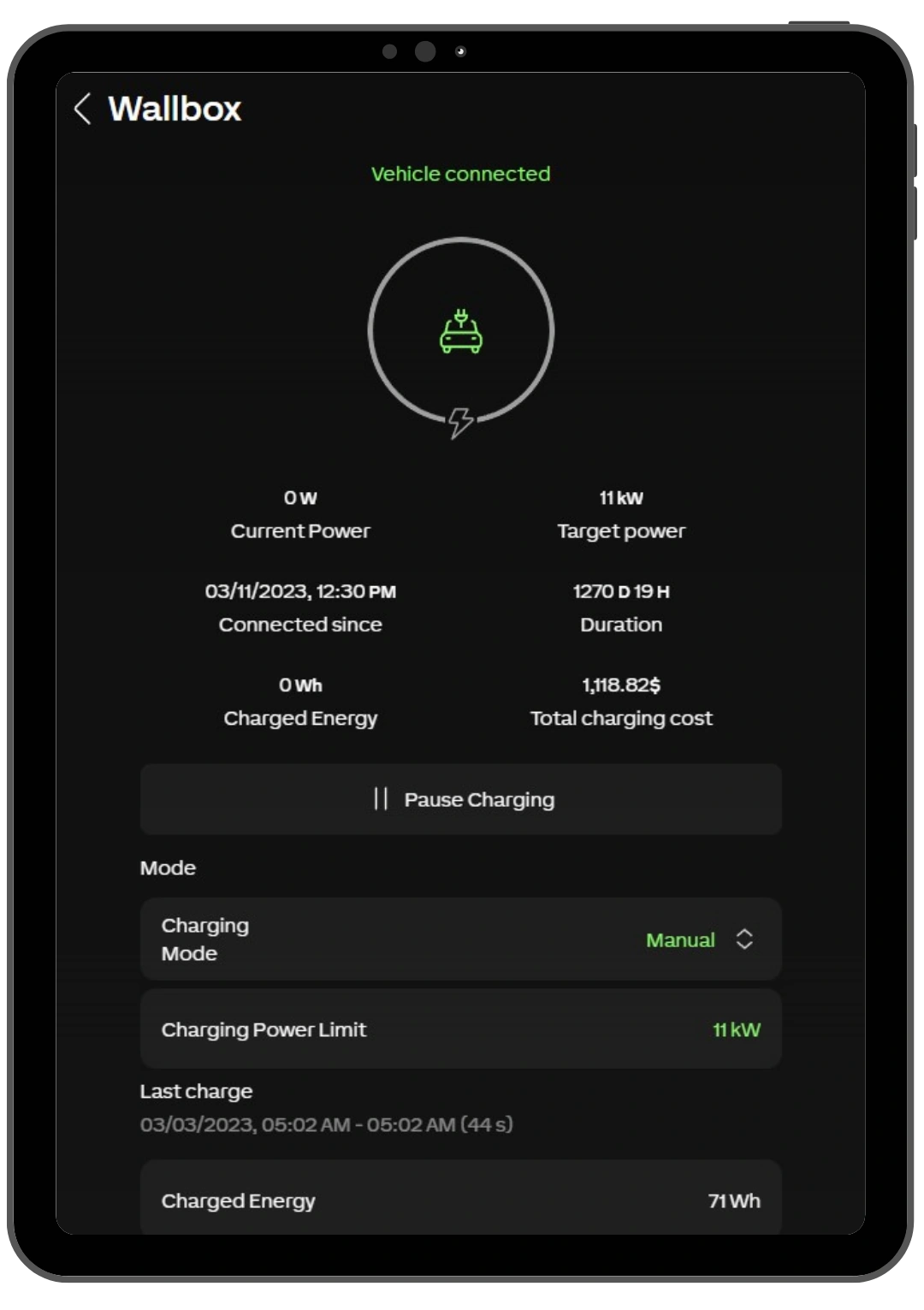
Once your vehicle is connected and charging is enabled, the system can follow your chosen mode. It might use available solar surplus, charge during a configured period or prioritise charging within the installation’s limits.
When your plans change, simple controls let you choose a different approach.
Routine charging
Use configured settings that suit your usual time at home.
Flexible modes
Change charging priorities to match your needs.
Simple adjustments
Start, pause or change available settings through the Loxone App.
Clear visibility
View supported charging status and power information in one place.
Put your sunshine to work.
Solar charging
When your solar panels generate more electricity than your home is using, that surplus can help charge your vehicle.
With suitable metering and compatible equipment, Loxone can adjust charging as the available surplus changes. If generation drops or household demand rises, charging can reduce or pause according to the selected mode.
It’s a practical way to use more of your own generation when your vehicle is parked at home.
Use available surplus
Direct suitable surplus generation towards vehicle charging.
Respond to changing conditions
Adjust charging as solar production and household consumption vary.
Choose your approach
Prioritise solar use or allow grid electricity when charging takes precedence.
Charging that works with your home.
Dynamic load management
Your vehicle shares its electricity supply with heating, cooking and other household equipment.
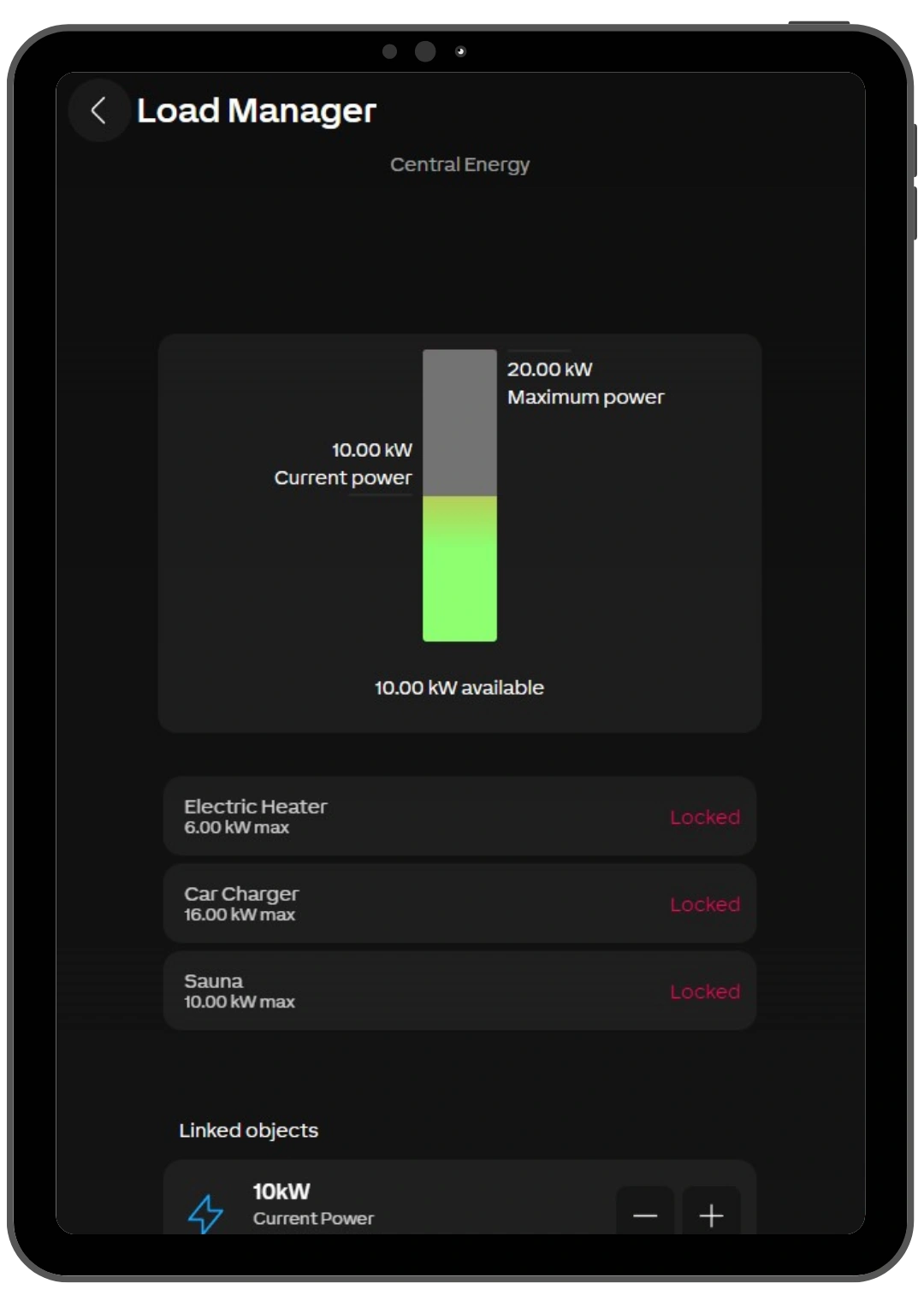
Dynamic load management uses measurements of demand to adjust compatible charging equipment. When other loads increase, charging power can be reduced to help keep consumption within configured limits.
As capacity becomes available, charging can increase again.
Whole-home awareness
Consider charging alongside measured household demand.
Adjustable charging power
Respond to changing capacity within supported charging limits.
Coordinated charging points
Where multiple compatible chargers are installed, available power can be shared according to configured priorities.
The aim is to make effective use of available capacity throughout the day.
Charging doesn’t work alone
Your driveway is part of your energy system.
EV charging becomes more useful when it works with solar generation, household consumption and other controllable equipment.
Within the wider Loxone system, these functions can follow shared priorities.
A sunny afternoon…
Solar generation
Measurements identify electricity available beyond the home’s current demand.
EV charging
A connected charger adjusts charging to use available surplus.
Hot water
A compatible system can heat water when its configured priority and operating conditions allow.
Your priorities determine how the available energy is used.
Charging technology
Technology working behind the scenes.
A reliable charging experience starts with the right equipment and installation.
DY-Techniek considers your vehicle, parking arrangement, electrical supply and future requirements to plan an appropriate charging solution.
Charging station
Provides a suitable connection to your vehicle and supports the charging controls required for your project.
Energy metering
Measures electrical demand and, where applicable, solar generation to inform charging decisions.
Communication interfaces
Connect compatible charging equipment with the automation system.
Loxone App
Provides access to supported charging information, modes and everyday controls.
Miniserver
Coordinates charging with energy measurements, schedules and other connected home functions.
Compatibility
The right connection for your vehicle and home.
A charger needs to suit both your vehicle and the wider installation.
Depending on the project, a Loxone Wallbox or supported third-party charger can provide the required integration. Available functions depend on the specific charger, its interface and your vehicle’s charging capabilities.
DY-Techniek checks these details alongside your electrical supply, solar installation and any existing energy systems to determine the appropriate approach.
More About Intelligent Homes

Energy Management

Multi-Room Audio

Smart Shading

Security & Access Control

Climate Control

Lighting Automation
Smart Home Automation
Your next journey starts at home.
Intelligent charging, designed
around your daily life.
Make home charging easier with a system that responds to available energy, household demand and your changing plans. Use more of your solar generation when available and keep charging controls within easy reach.